Your Own Online Ordering Website for a Restaurant in Egypt: Do You Still Need the Delivery Apps?

Delivery apps bring new customers but take a commission on every order and keep the customer data. When your own ordering website makes sense, what it needs, and how to move repeat customers to it without leaving the apps.
Keep the delivery apps for new customers, and build your own ordering website for the customers who already know you. Delivery apps in Egypt bring reach and, in many cases, drivers, but they take a commission on every order and keep the relationship with the customer. Your own ordering channel costs a fixed amount instead of a cut of every order, lets you run your own offers, and gives you the customer's phone number for the next order. Most restaurants that do this well use both.
Delivery apps vs your own ordering website
| Delivery apps | Your own ordering website | |
|---|---|---|
| New customers | Strong: people browse the app | Weak: you must bring the traffic |
| Cost | A commission on every order | A fixed cost to build and run |
| Customer data | The app keeps it | You keep it |
| Offers and prices | Within the app's rules | Your decision |
| Delivery | Often included | Your own drivers or a courier partner |
| Brand | One logo among hundreds | Your brand only |
The logic is simple: the first order from a new customer can come through an app; the tenth order from a loyal customer should not.
When does your own ordering website make sense?
1. A real share of your orders comes from repeat customers. 2. You already have your own drivers, or a reliable courier partner. 3. You take many orders on WhatsApp or by phone, and they get mixed up at busy times. 4. You have several branches and want orders routed to the right one. 5. You want to run your own promotions and loyalty without asking a platform.
If most of your orders are from first-time customers and you have no drivers, start with the apps and a strong Instagram page; see do you need a website if you sell on Instagram.
What should a restaurant ordering website include?
| Feature | What to get right |
|---|---|
| Menu with photos | Real photos, clear prices, sold-out items hidden automatically |
| Options and extras | Sizes, sauces, add-ons and notes, with the price updating live |
| Branch and area | The customer picks an area; the order goes to the nearest branch with the right delivery fee |
| Scheduling | Order now or for a later time |
| Payment | Cash on delivery, cards and wallets |
| Order to the kitchen | A tablet dashboard, a printer, or WhatsApp, so no order is missed |
| Order status | A confirmation message and an updated status for the customer |
| Reorder | "Order again" in one tap for returning customers |
| Offers and loyalty | Codes, combos and points that you control |
How do you bring customers to your own channel?
Every delivery bag is an advert for your own website. Use it.
- Put a card with a QR code in every order: "Order directly next time and get a free dessert"
- Make the website link the first thing on Instagram and WhatsApp
- Give a small, real reason to order directly: a free item, faster delivery or points
- Keep the same prices or better on your own site
- Answer WhatsApp orders by sending the ordering link, so they are recorded properly
Ready-made ordering system or custom website?
Ready-made ordering systems (monthly subscriptions) are the fastest start and work well for one or two branches. A custom website makes sense when you have several branches, special menus, your own delivery fleet, or need integration with your cashier system. Many restaurants start ready-made and move to custom as they grow. For costs in Egypt, see website design cost in Egypt.
Common mistakes
- Higher prices on your own site than on the apps
- A menu that is a PDF or an image, impossible to order from
- No clear delivery areas or fees until checkout
- Orders arriving on an email nobody reads
- Launching the site and never telling existing customers
How Flowlix builds ordering websites
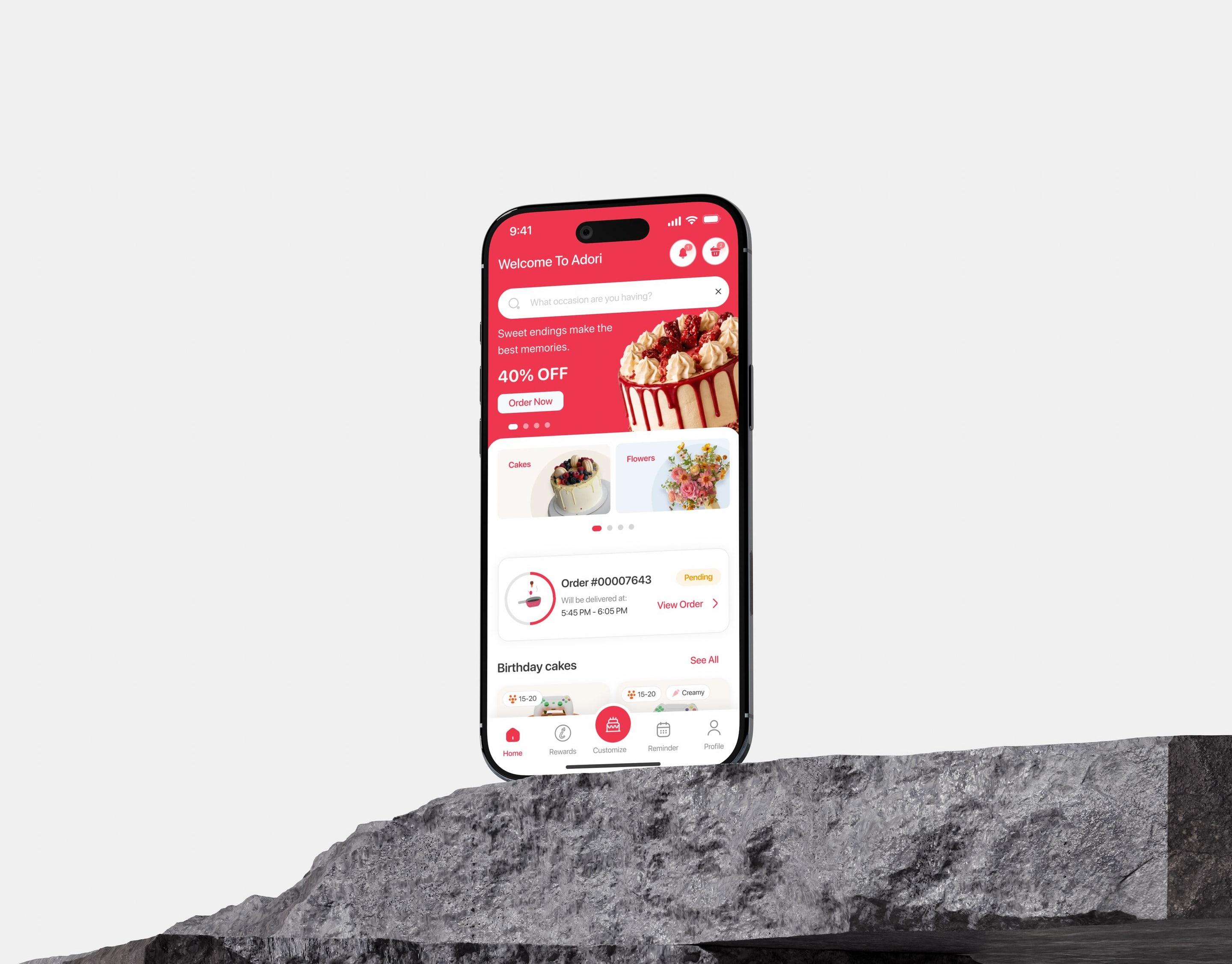
Flowlix Studio is a UI/UX design and development studio in Ismailia, Egypt. We design and build ordering websites and apps with menus, options, branches, delivery areas, cash on delivery and online payment, and a dashboard for the kitchen. We also designed the ordering experience of Adori, a custom-cake app in Qatar; see how we approach ordering apps. We work with brands in Egypt, Saudi Arabia, the UAE and Qatar. More on our e-commerce service.
Frequently asked questions
Will I lose customers if I leave the delivery apps?
You do not need to leave them. Keep them for new customers and move repeat customers to your own channel.
Can my website use the delivery apps' drivers?
Usually not. Your own channel needs your own drivers or a courier partner.
Do customers in Egypt pay online for food?
Many still prefer cash on delivery, so offer it next to cards and wallets.
Do I need an app or a website?
Start with a fast mobile website. An app makes sense when you have many repeat customers and want notifications and loyalty in their pocket.
How do I get the orders in the kitchen?
Through a simple dashboard on a tablet, a printer, or a WhatsApp notification. Choose what your team will actually watch at peak time.
Talk to us
Book a free consultation on WhatsApp. Tell us how many branches you have and how you take orders today, and we will suggest the simplest ordering setup for you, with a fixed quote within 48 hours.